BigCommerce
Project Type
Web & Branding
Role
4 Stages
Sr. Visual Designer
Deliverables
Visual Design, Design System, Responsive Website, Motion Design, Developer Handoff
Introduction
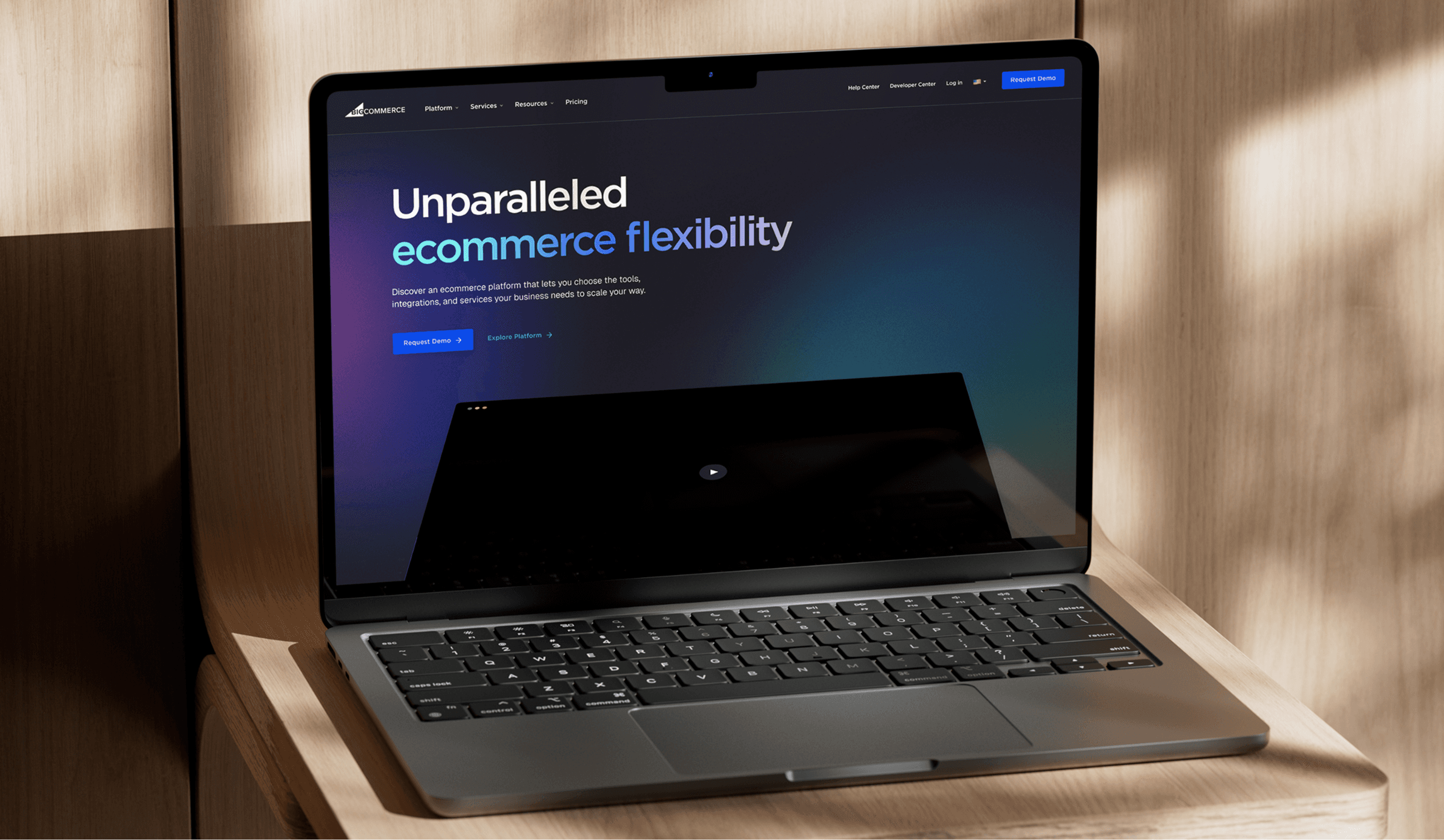
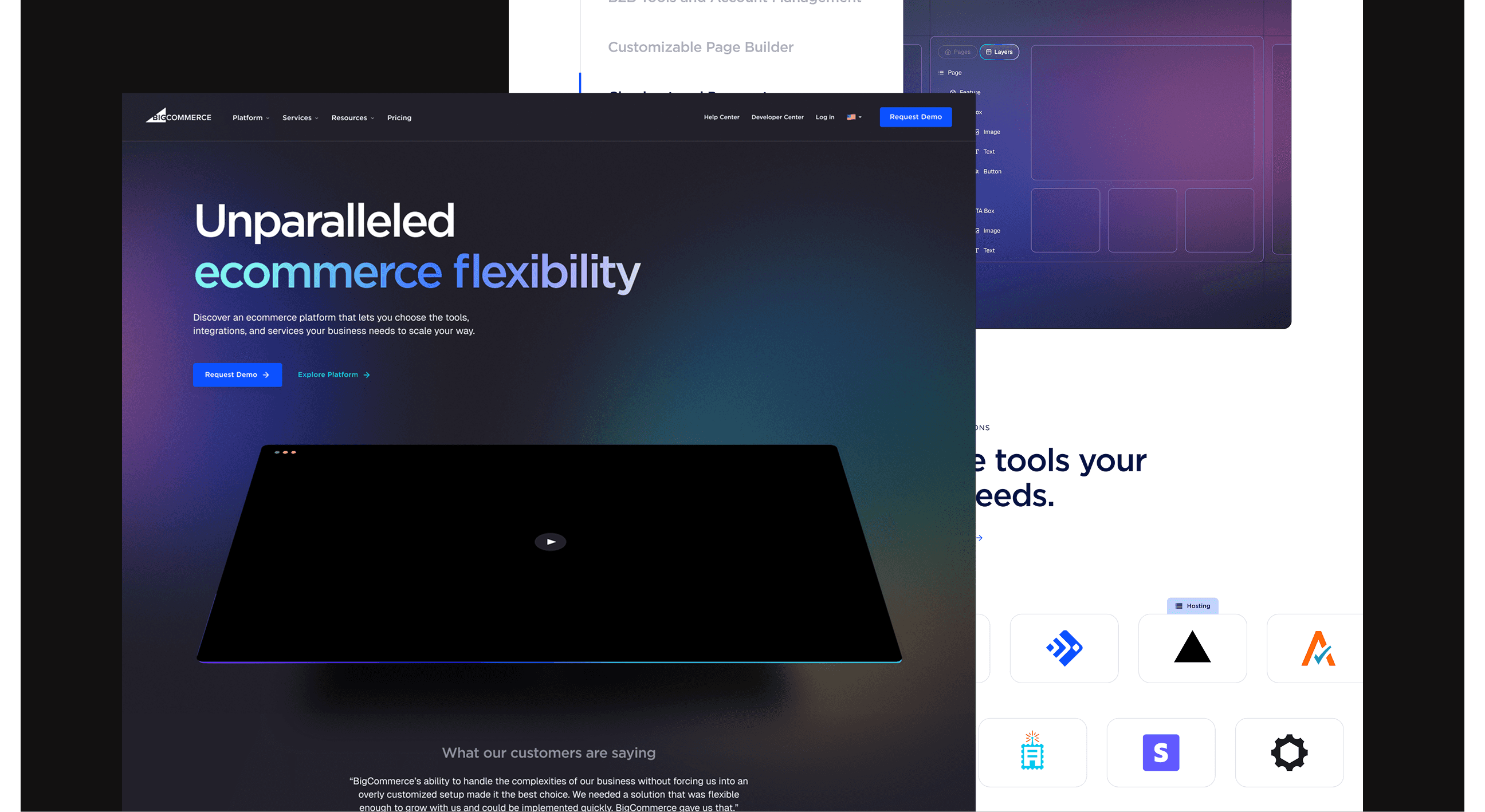
Commerce partnered with Huge to modernize their digital presence and build a scalable design system. As Senior Visual Designer, I led homepage, mobile, and template design across both the Commerce and BigCommerce brands. The result was a sleek, product-led foundation built to stand out in a space dominated by Shopify and Salesforce.
What problem were we solving?
The Commerce site needed a more modern and cohesive way to express the product’s value, but the existing pages lacked structure, clarity, and consistency. Stakeholders struggled with fragmented layouts and a design system that wasn’t supporting the content in a scalable way. Research into competitor sites and internal content workflows showed the need for clearer hierarchy, stronger storytelling, and components that could flex across both enterprise messaging and product features.
What were the goals of the redesign?
The redesign aimed to create a clearer, more cohesive way for Commerce to communicate its value to enterprise customers. We needed to build a flexible page system that could adapt to evolving brand guidelines while improving clarity, hierarchy, and storytelling across key product and marketing pages. The goal was to deliver a modern, premium experience that supported complex content, scaled easily for the marketing team, and reflected the sophistication of the platform.
Brand & Competitive Audit
We saw an opportunity: lead with polish, clarity, and a design system that felt both sophisticated and intuitive.
We began with a deep look at the landscape—Shopify, CommerceTools, Adobe Commerce, and Salesforce. Most competitors felt overly technical, lacking visual distinction or emotional resonance.
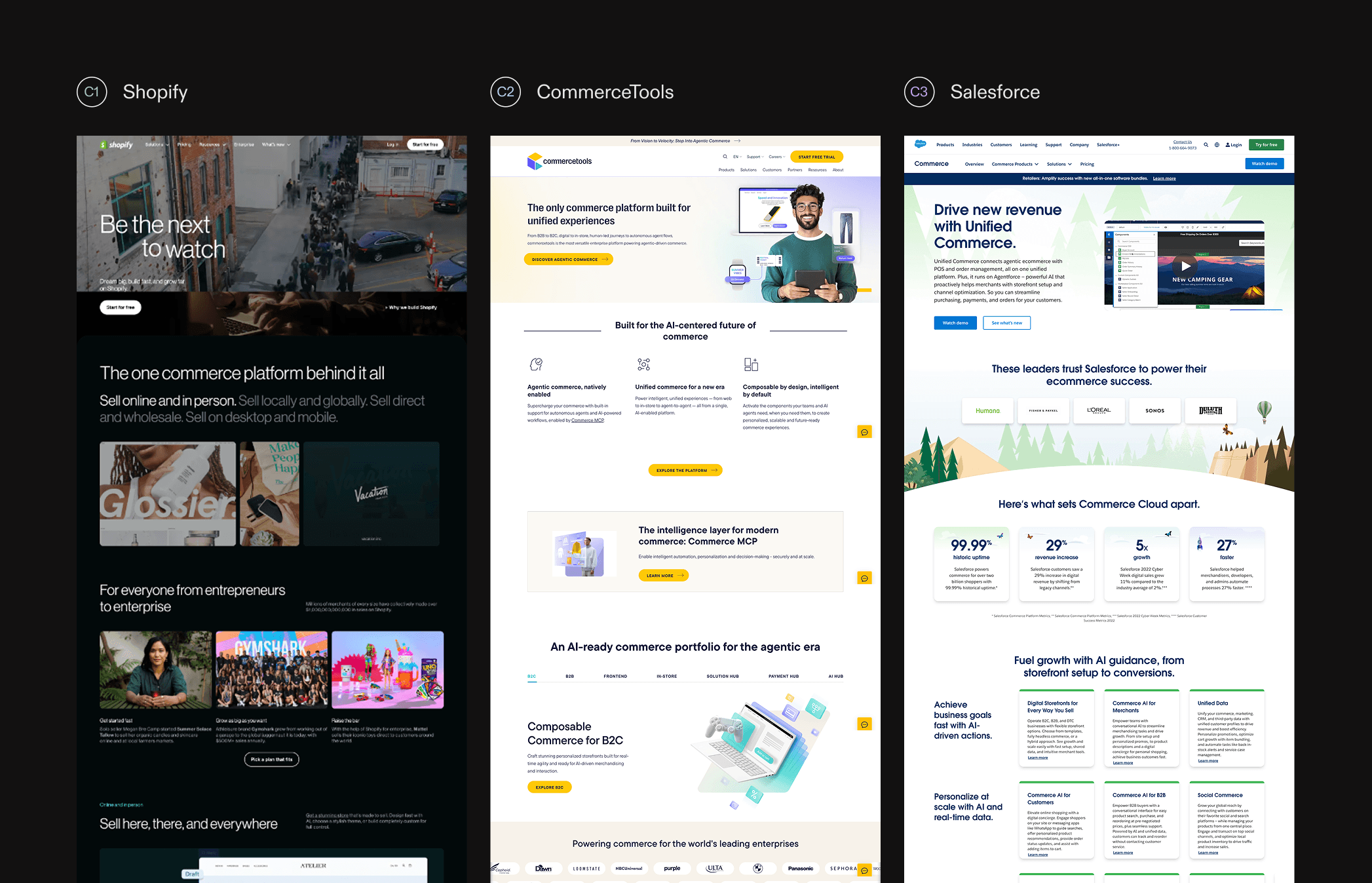
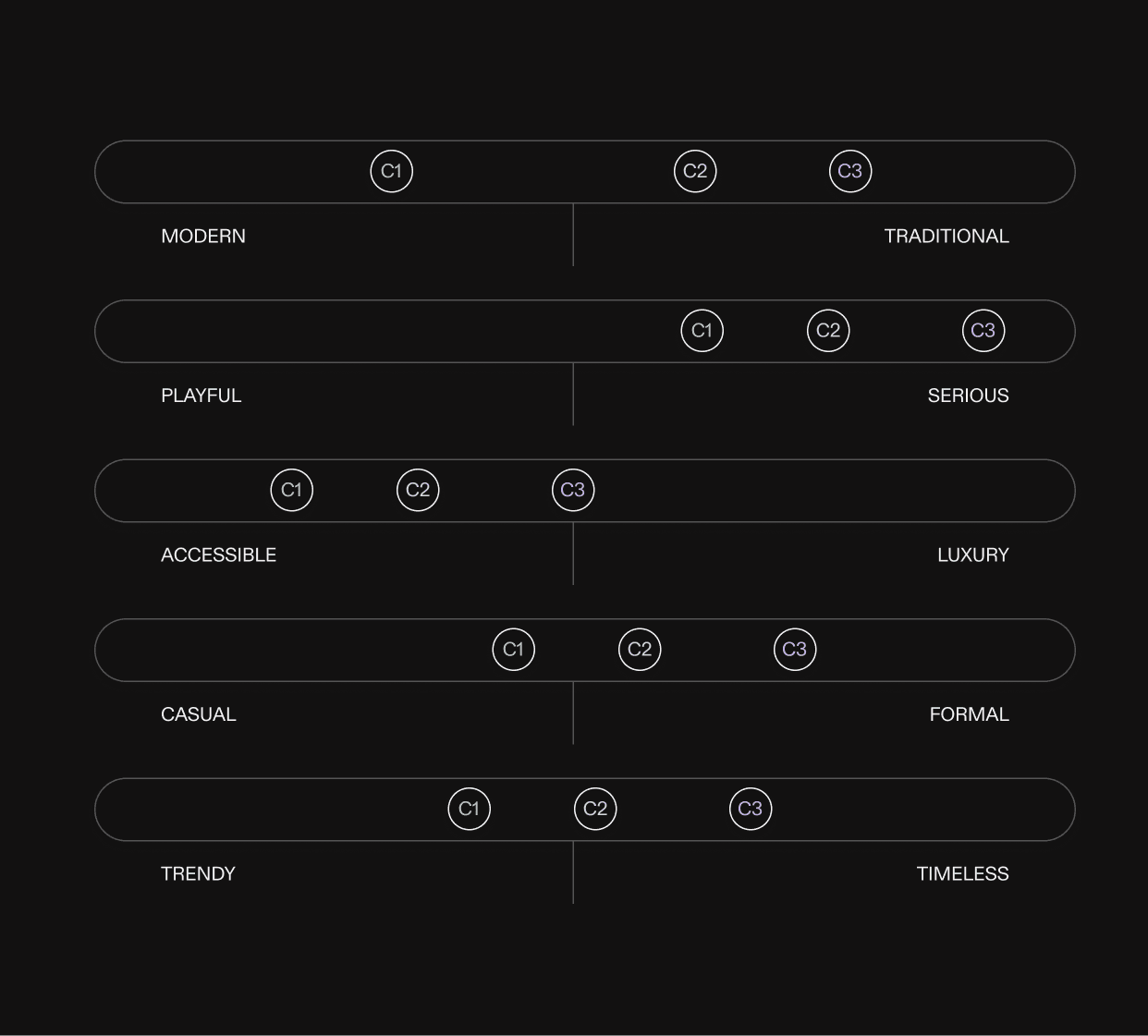
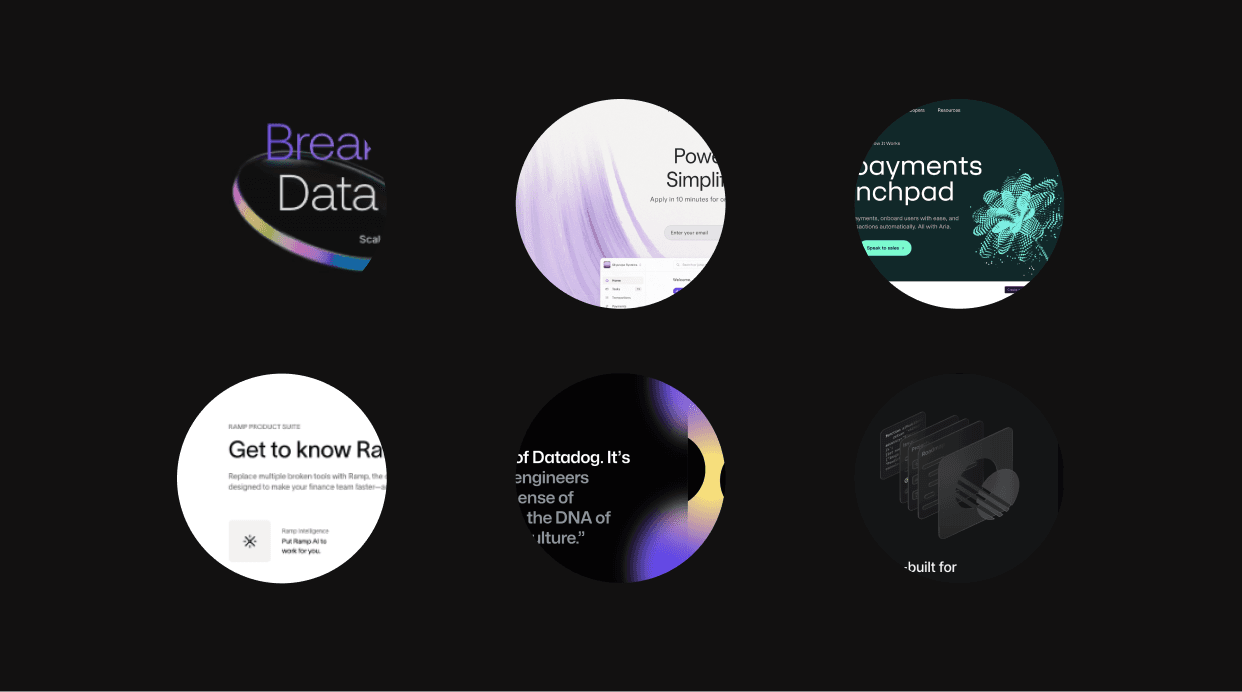
(Left) An analysis of the competitors personality helps to narrow down the differentiators or key attributes for the brand. (Right) Some visual motifs used for inspiration.
Homepage Strategy
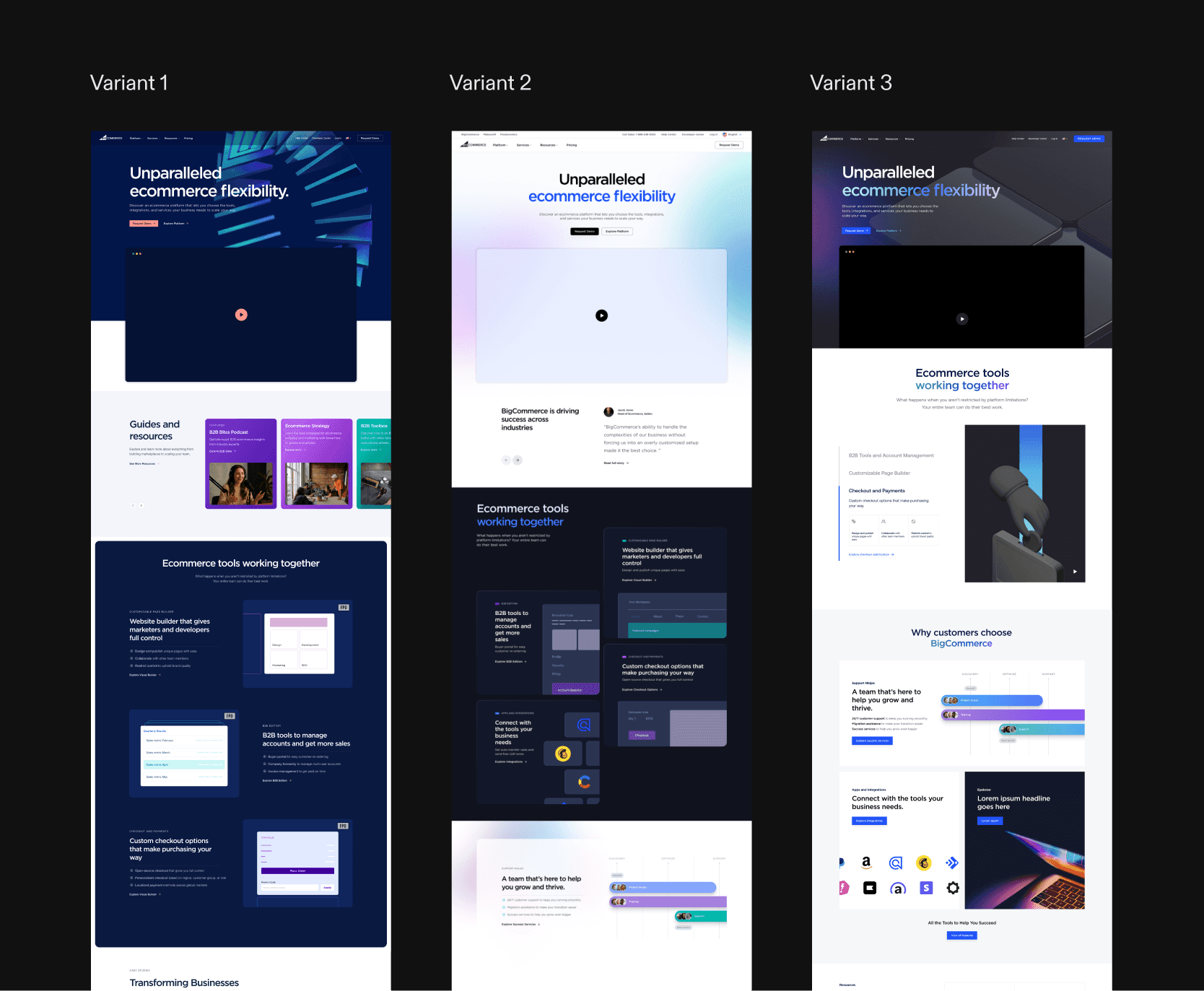
The homepage was our north star. It had to speak to both new and returning users, and guide enterprise buyers quickly to value. Drawing from past analytics, we removed underperforming patterns (like carousels) and focused on a modular layout built around clear CTAs and proof points.
Multiple homepage concepts were presented to evaluate how different content architectures and tonal treatments could best convey BigCommerce’s value to enterprise buyers. Iteration here was key in refining both brand narrative and UX flow.
Design Systems & Templates
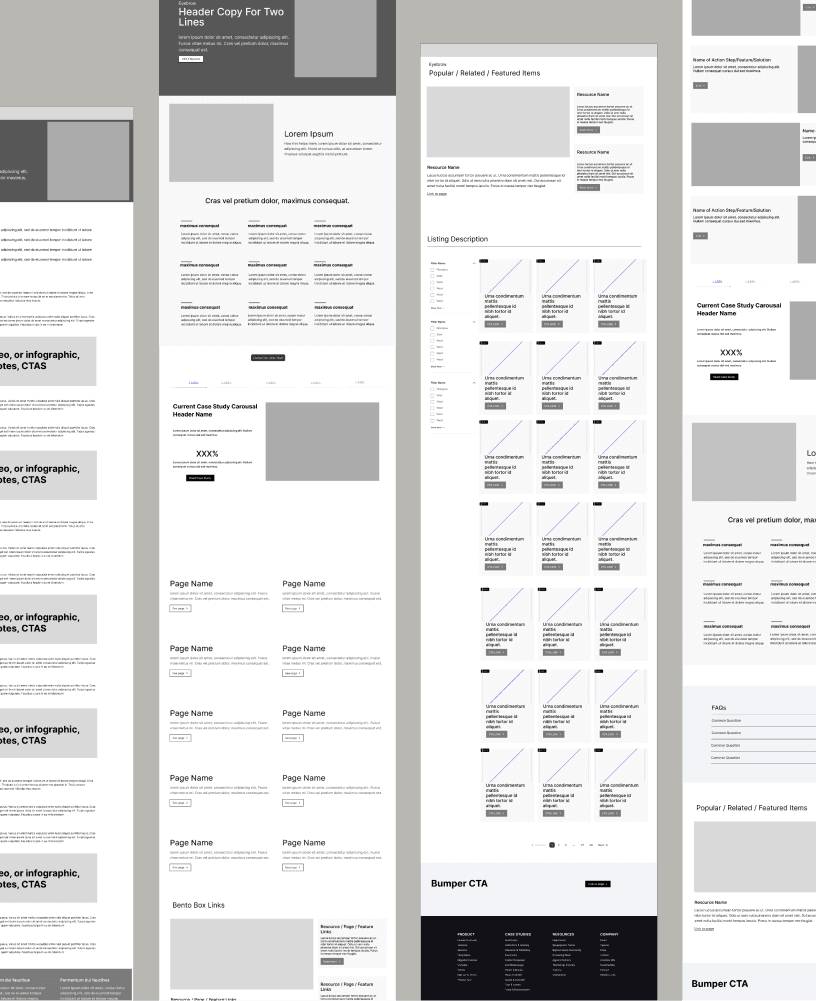
We built a shared system that extended across both Commerce and BigCommerce. This included flexible templates, typographic hierarchy, reusable components, and rules for responsive behavior—all designed with Makeswift’s dev environment in mind.
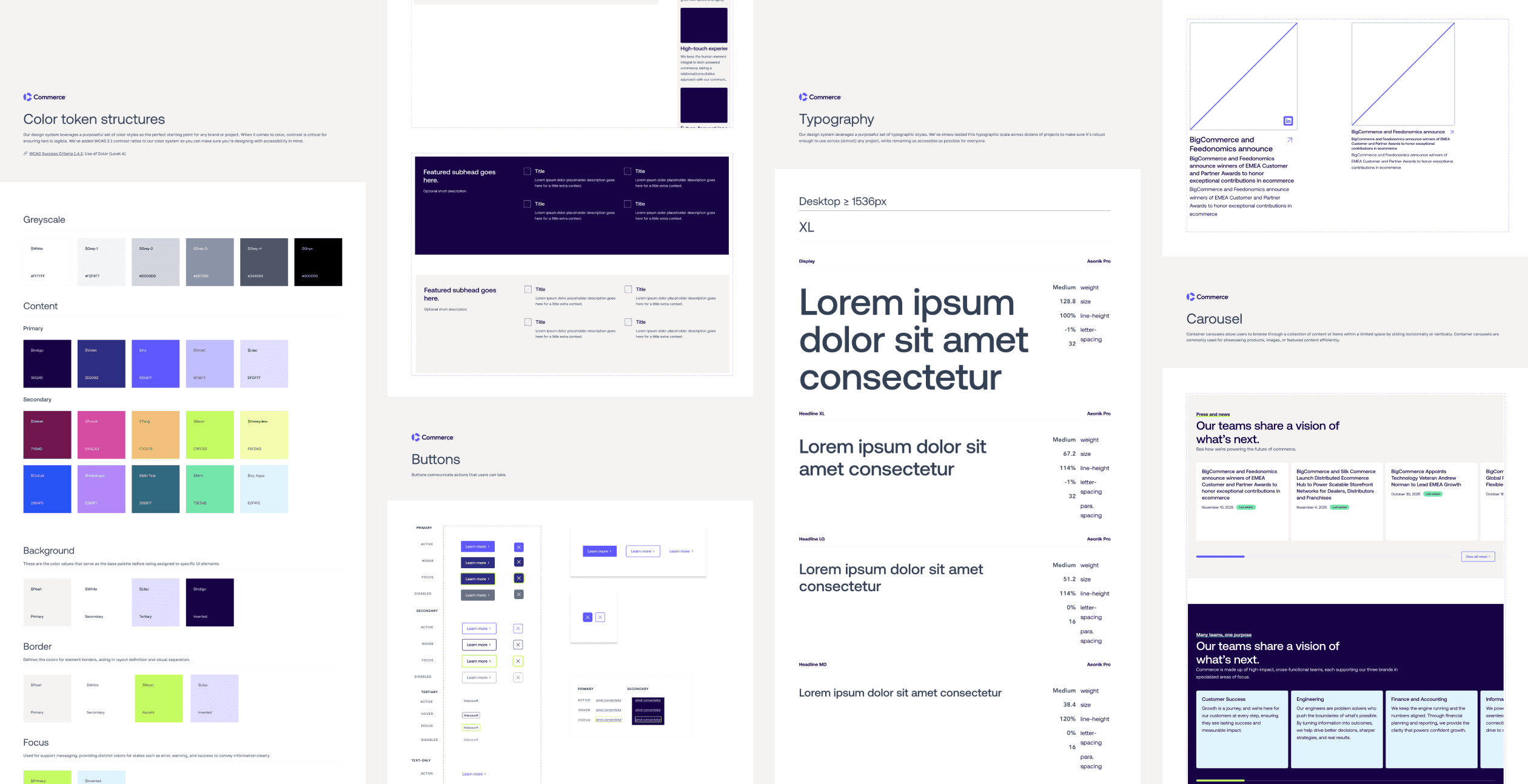
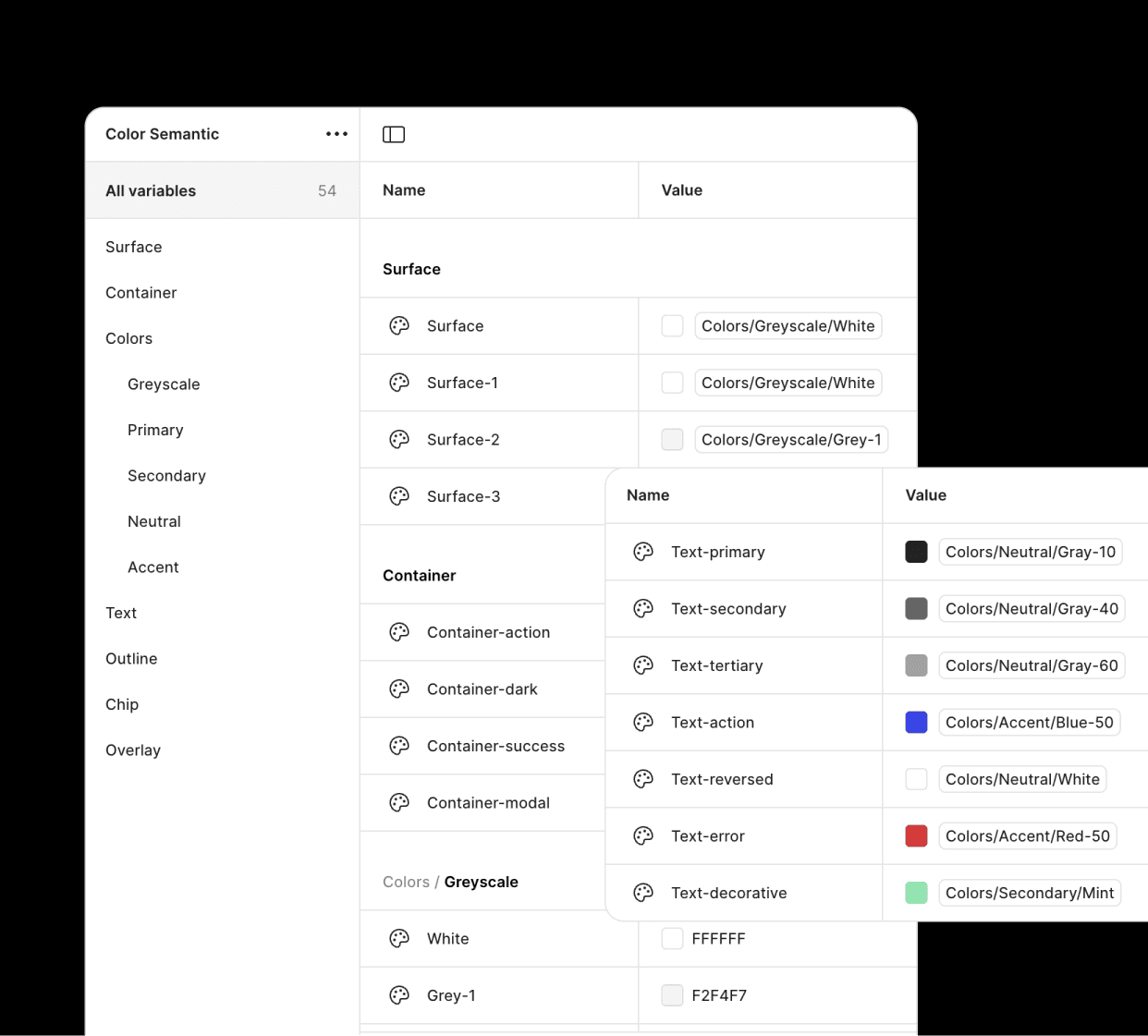
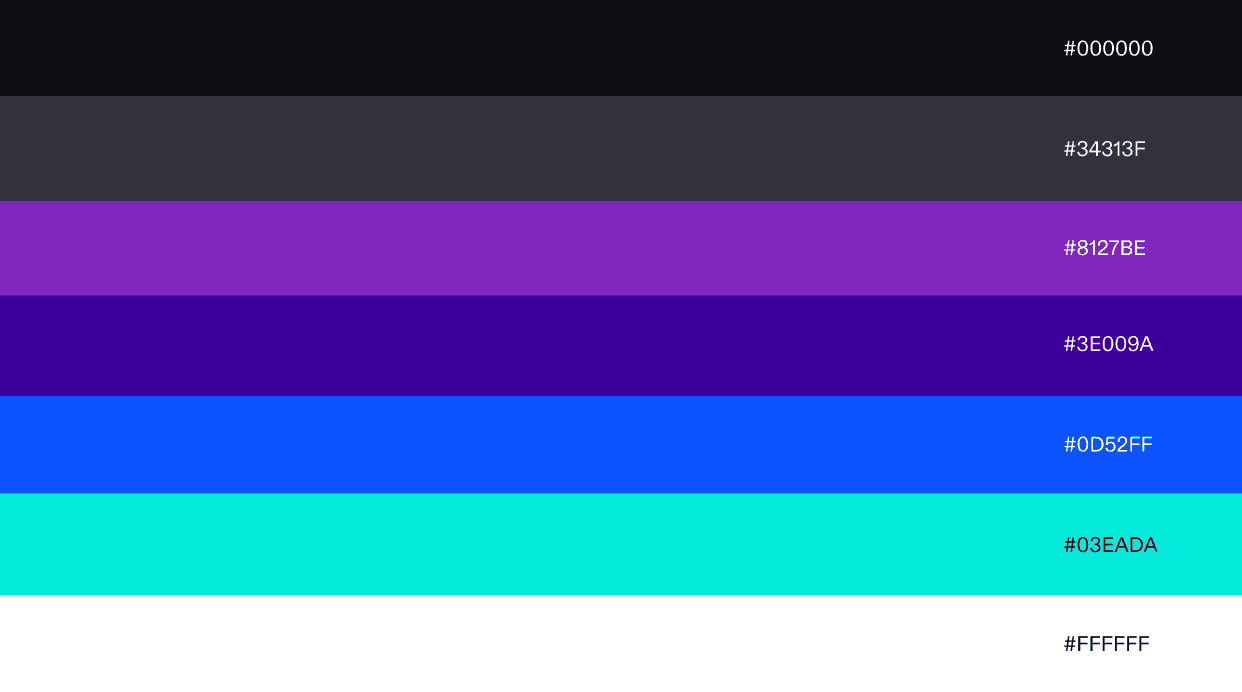
I helped establish a comprehensive design system including semantic color tokens, responsive typography, button states, and modular UI components. Designed with dev handoff in mind, the system balanced flexibility across Commerce brands while ensuring alignment with Makeswift’s platform constraints.
Every component was built with system thinking—from semantic color structure to responsive typography and state logic. This work became the backbone for page templates and a more efficient cross-team design workflow.
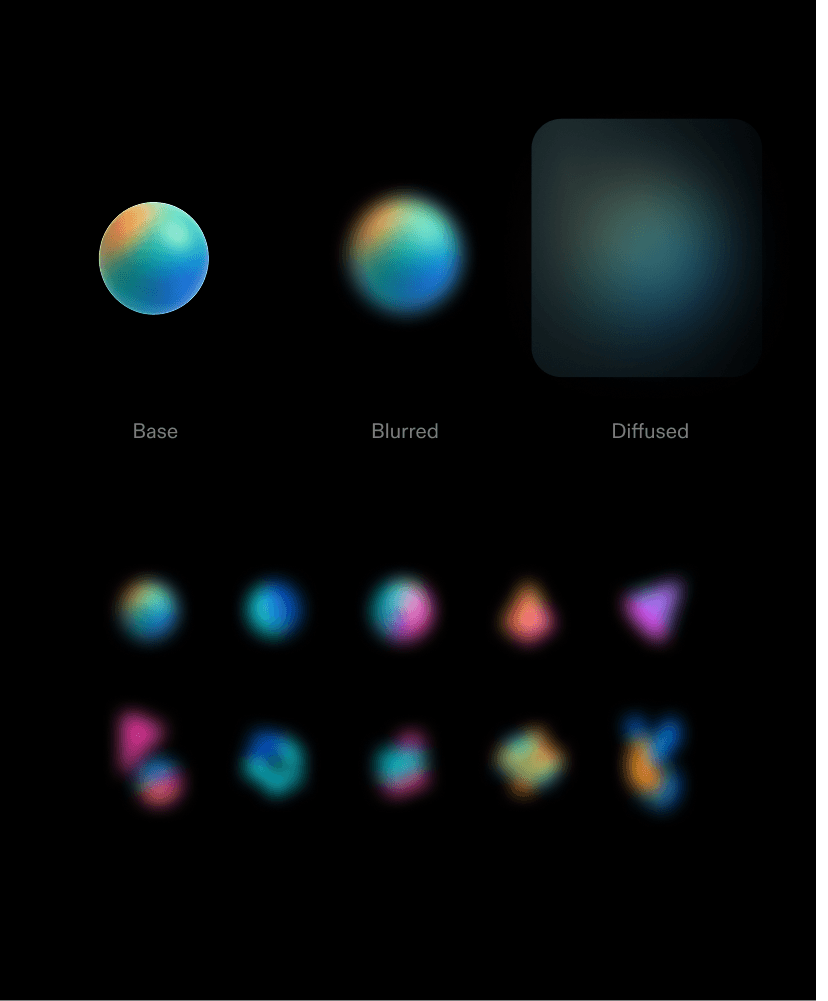
There was also development of a flexible system for background accents. These were diffused, gradient-based visuals that added motion and polish across the site while staying scalable and on-brand.
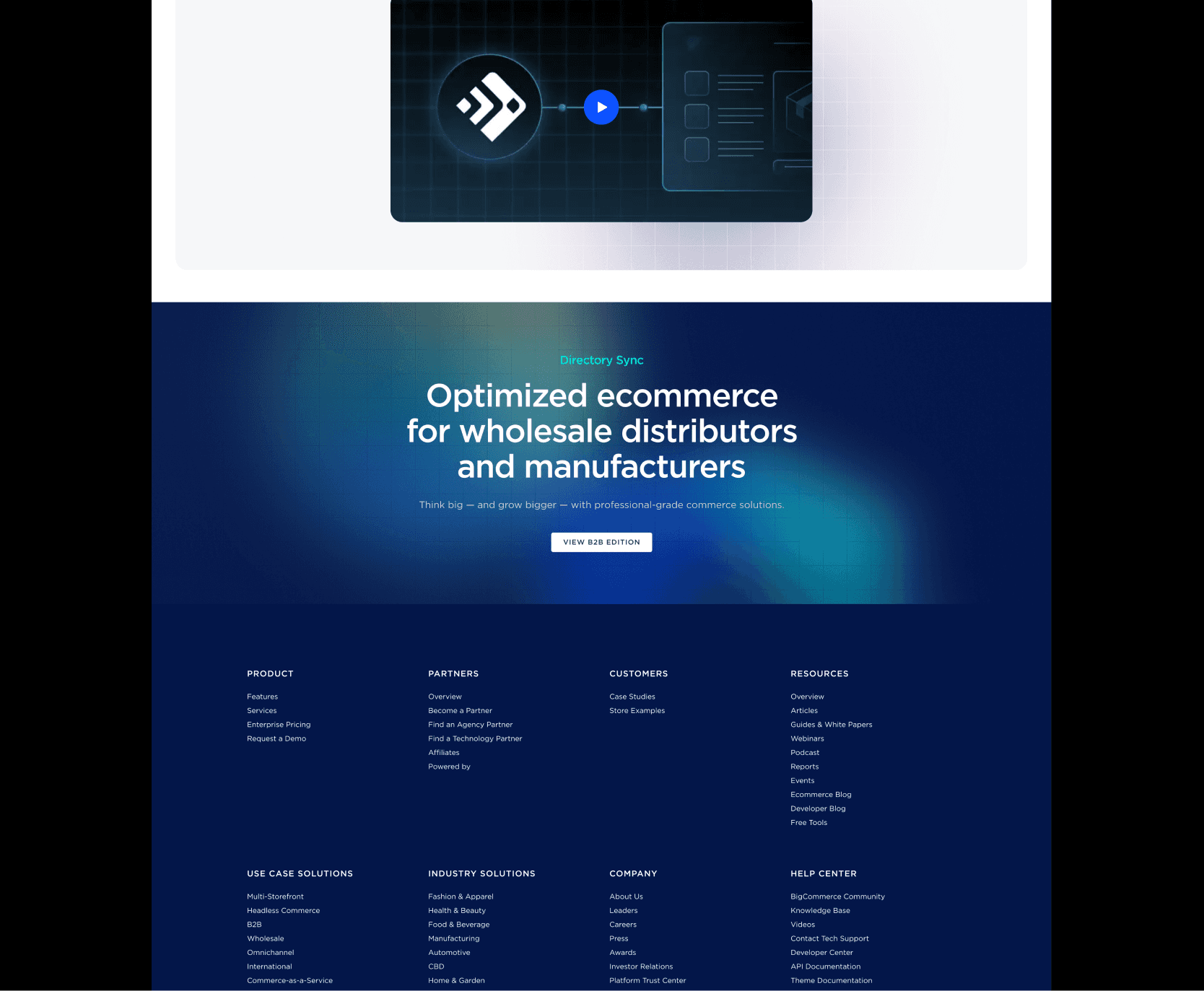
Homepage Animations
To help Commerce stand apart from static, utilitarian competitors, I designed a series of homepage animations that highlighted their product suite in a dynamic, engaging way. These animations weren’t decorative—they served to quickly communicate product breadth and functionality in a way that static design couldn’t.
I designed interactive homepage animations that activate as users scroll, giving a dynamic preview of Commerce’s core offerings.
These subtle motion cues help users connect features to value, sparking curiosity and encouraging deeper exploration.
Responsive Thinking
We didn’t just scale layouts down. For key mobile breakpoints, we rethought imagery, illustrations, and content hierarchy to ensure legibility and impact. Some hero visuals were reworked entirely to retain visual strength on smaller screens.
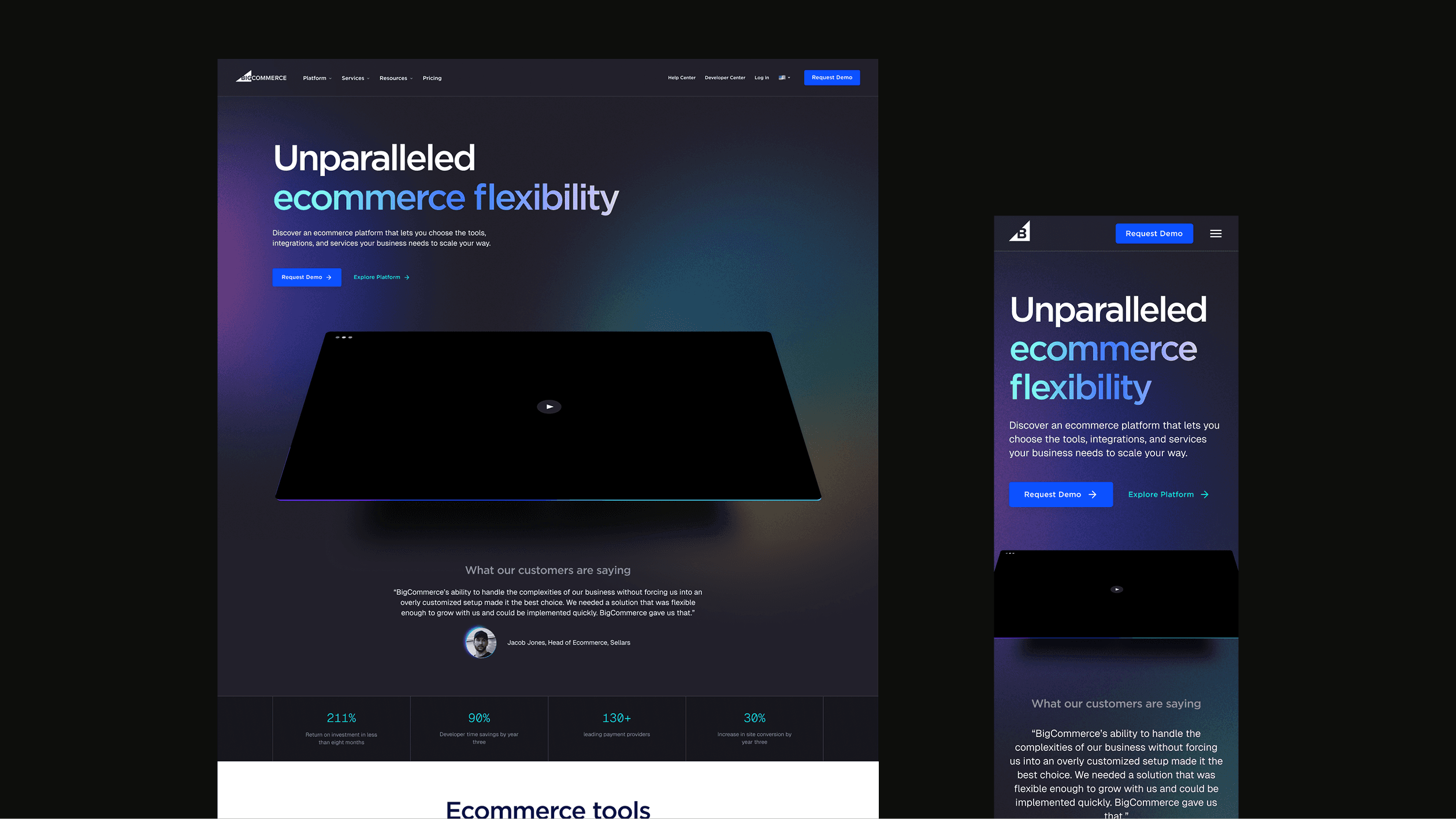
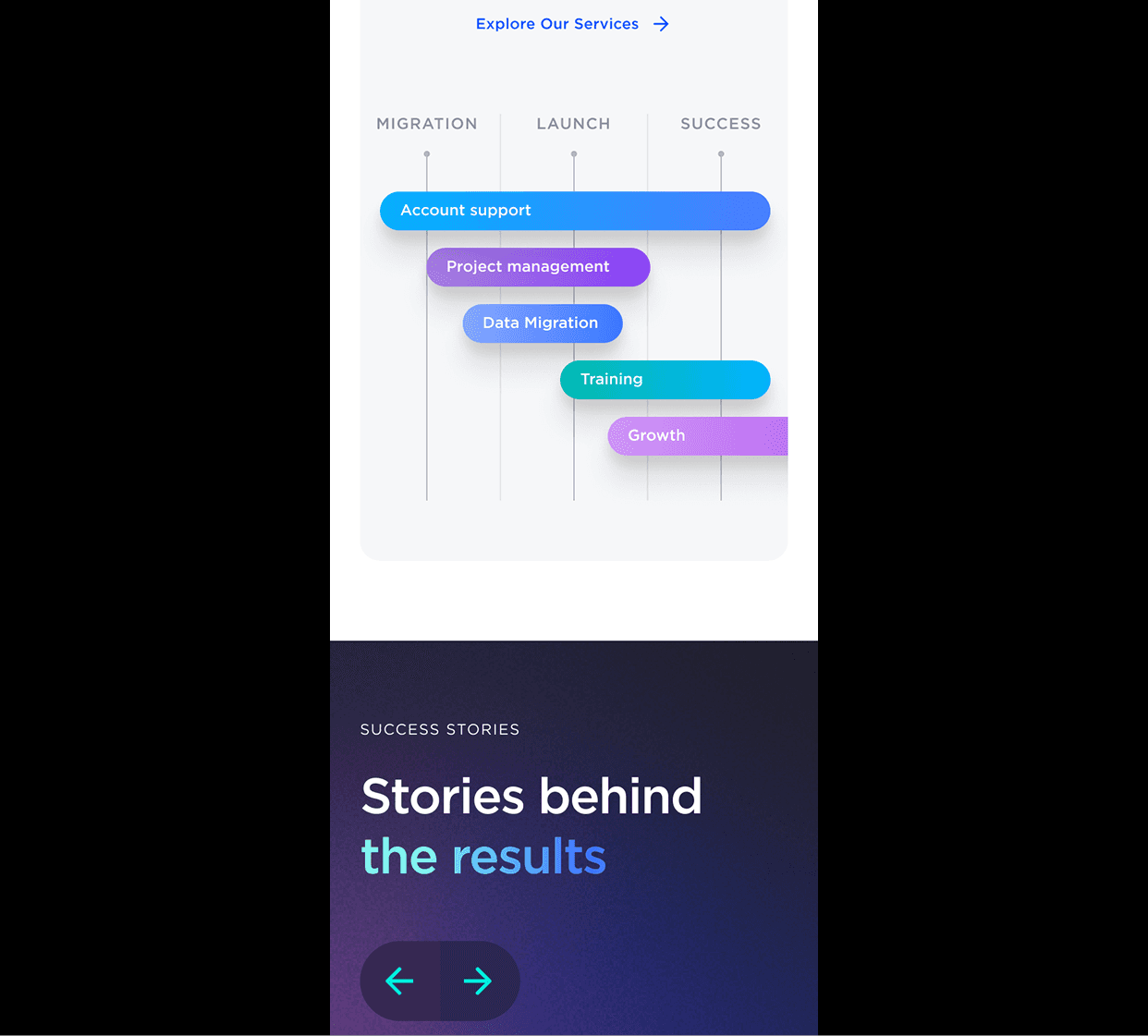
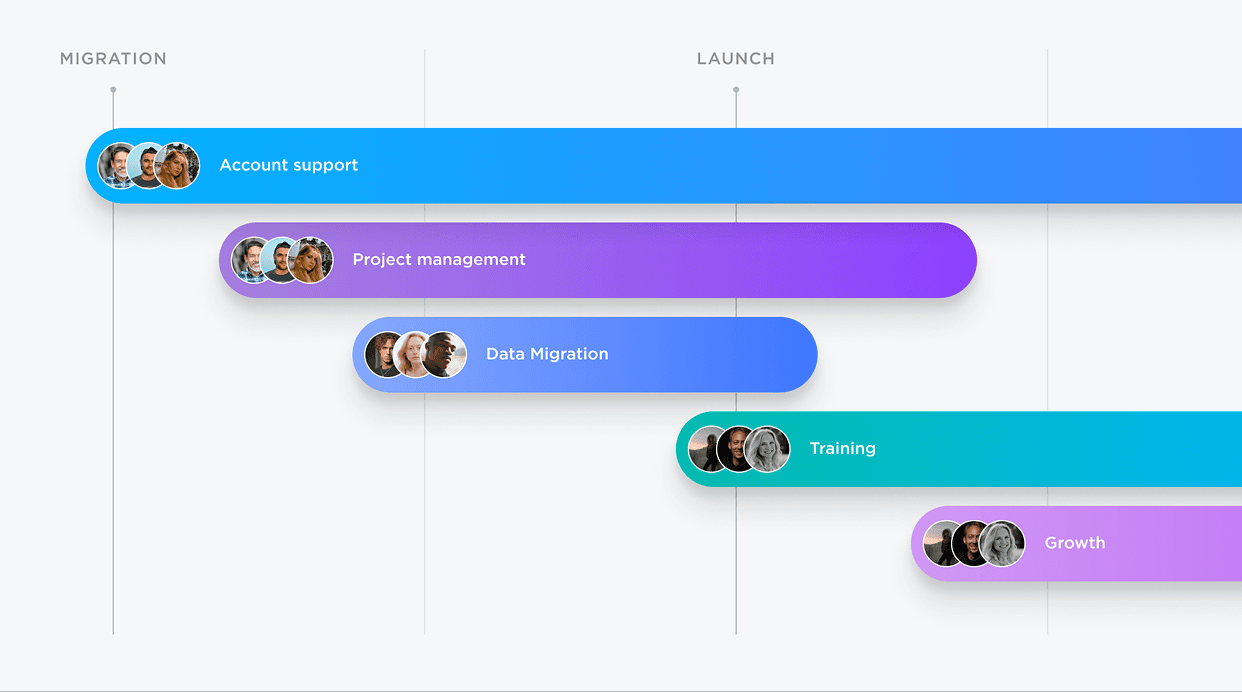
Designing for mobile wasn’t just about shrinking layouts. Some hero graphics and visual treatments didn’t translate well to smaller screens, so I reworked them to retain clarity and hierarchy. This helps ensure the experience felt purposeful across every breakpoint.
Collaboration & Handoff
Throughout the project, I participated in weekly critiques, stakeholder reviews, and dev handoff meetings. Final Figma files included interaction specs and annotations to smooth implementation. Our handoff emphasized pixel precision without sacrificing dev flexibility.
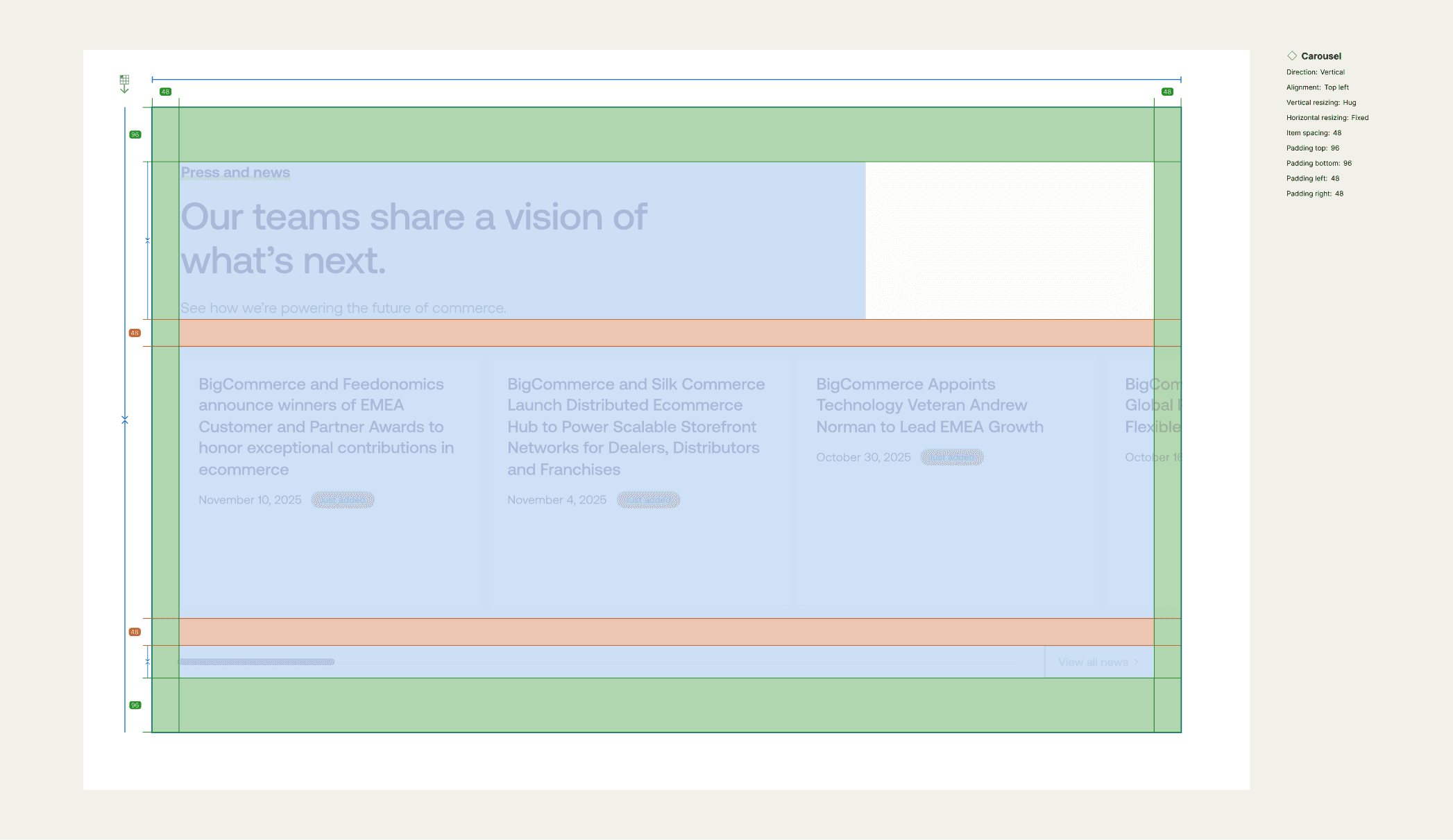
To ensure smooth collaboration with engineering, I delivered annotated Figma files with spacing rules, interaction specs, and component logic.
Every module was built with dev in mind, supported by live walkthroughs and stakeholder syncs to align on intent, clarify edge cases, and keep implementation frictionless.
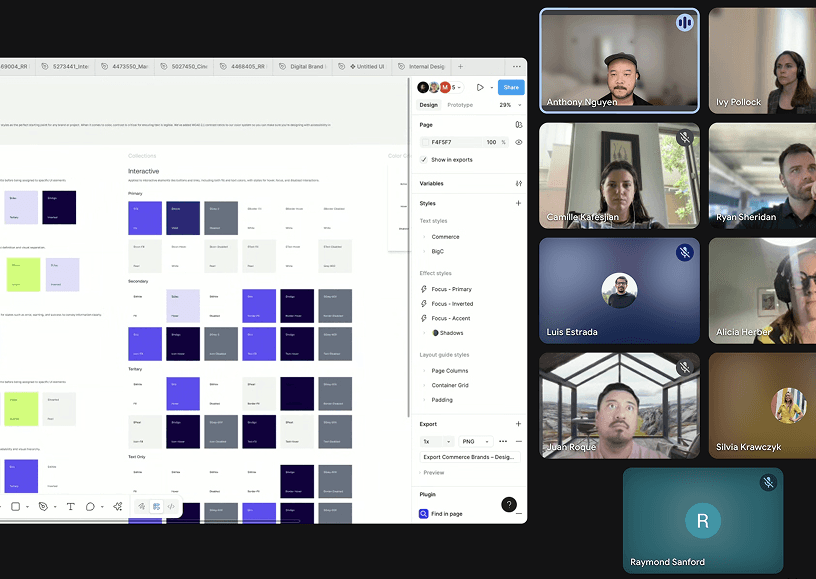
Changing how enterprise commerce shows up online.
Impact
Proud to have helped position Commerce and BigCommerce for the next era of growth.
2
Fully redesigned brand websites delivered in under 4 months
80+
Responsive templates and components systemized across both brands
100%
Positive feedback from stakeholders during final review
Project credits
Design
Anthony Nguyen
Marshall Foster
Development
Ivan Ernesto Guevara
Creative direction
Anthony Nguyen
Tim Debrandt
Marshall Foster
Project management
Camille Kafesjian
Rosie Sullivan
Client team
Alicia Herber
Juan Roque
Ryan Potter
Ryan Sheridan
Devin Rogers
Year
2025